
|
Early diagnosis is key for the management of AUTISM and most children are not diagnosed until their 3rd or 4th birthday. April is AUTISM Awareness Month. Here is a story that I wrote for Spectrum Magazine about a unique physical biomarker that will help diagnose some children with a rare genetic condition linked to AUTSIM before their “1st” birthday. Parents, Precision Medicine, Genetics and Autism - The discovery of an early-age biomarker for a rare syndrome highly linked to autism.
April 1, 2017 By Sandra Bedrosian Sermone What does a parent have to do with precision medicine, genetics and autism? If you would have asked me that question three years ago, I most likely would have said absolutely nothing! But today, my answer is absolutely everything! One of the hottest topics in Precision Medicine these days is research for biomarkers. The search for the discovery of valid biomarkers enables early and more targeting methods for diagnosis and intervention. Physical biomarkers that can be seen on a patient that are easily identifiable are very helpful because they are non-invasive indicators of a specific condition or disease. In this case, a gene mutation highly linked to autism. In a publication by Autism Speaks[1], it was noted that as much as ½ of all autism cases are caused by rare gene mutations. Genetic autism research projects which collaborate with hundreds of institutions worldwide, such as SPARK for Autism[2] and MSSNG[3], are currently going on to understand the genetic influence of autism. These are huge international studies, focusing on hundreds of known linked genes. This has become so important and relevant that many top genetic testing laboratories, such as the US based company GeneDx[4], have recently created individual molecular genetic testing panels for specific known variants highly linked to Autism, including the mutated gene that my son Tony (aka Superman[5]) was diagnosed with in 2014. Tony underwent 6 long years of expensive traditional single gene genetic testing before he was finally diagnosed with one of these highly linked autism genes. Using Whole Exome Sequencing (WES) at Duke University, the genetic program led by Professor Nicholas Katsanis,[6] found that Tony had a de-novo gene mutation on his ADNP (Activity-Dependent Neuroprotective Protein)[7] gene. The medical odyssey and long list of medical conditions that Tony suffers from is detailed in a Journal of Molecular Neuroscience publication entitled “The Compassionate Side of Neuroscience: Tony Sermone’s Undiagnosed Genetic Journey—ADNP Mutation”. [8] Tony’s mutation to his ADNP gene caused an extremely rare genetic condition called ADNP Syndrome (also known as Helsmoortel-VanDerAa Syndrome)[9]. In Tony, this complex neurological development disorder affected his brain formation and development as well as many other areas and functions of his body, including neurological, cardiovascular, endocrine, immune and gastrointestinal systems, as well as his vision, growth, feeding and sleep. He has gross motor, fine motor, oral motor, intelligence and speech delays. This syndrome also causes behavior disorders such as Autism. In fact, ADNP Syndrome is highly linked to autism and it is one of the most frequent ASD-associated genes known to date.[10] It is well-known that a major flaw in autism management is late diagnosis. Tony, who is now 9, displayed many autistic traits well before his 3rd birthday. As a baby and young toddler, he had an extremely happy and excitable demeanor with frequent smiling and laughter, similar to those with Angelman Syndrome.[11] Because he was also so medically complex with severe developmental delays, Tony was not diagnosed with autism until he was 6 years old. I fought for years to have my son diagnosed, but I believe that because he had a rare and ‘undiagnosed genetic syndrome’, his doctors could not separate the two and correctly evaluate him. Because of this, he lost many valuable years of early intervention specialized therapy when his young brain had greater plasticity that could have resulted in much better outcome for him. One of the most heartbreaking parts of a late diagnosis for a child is that early intervention is key! Had we known about this syndrome when Tony was a baby, he would have been able to start specialized therapy at a very young age, which is extremely important with conditions like autism, developmental delays and absent speech. The specialized therapy he received after his autism and genetic diagnosis has been life changing for him. This has been a very hard pill to swallow as a parent, knowing my child could have started aggressive therapies sooner had he only been diagnosed at a younger age. So how did this lead to discovering a biomarker? In autism, including the many hereditary and de-novo genetic cases, there seems to be very little identifiable simple physical biomarkers. In recent studies, MRI’s are being used to look at brain imaging for diagnostic biomarkers which are showing some connections to autism, as well as many studies on blood tests looking for potential links to the condition. However, these can be invasive, very expensive and these are certainly not easily identifiable simple physical biomarkers. For Tony’s condition, there were no known biomarkers. He was the first child in the world diagnosed following the discovery of the ADNP autism-related syndrome. At that time the team at Duke University knew very little because they had never seen anyone with this condition. The syndrome had NO name, there was NO place to find support, NO place to connect with other families, NO medical protocol, NO treatments, NO cure and NO information for to understand what this diagnosis meant for Tony. Enter “Parent-Powered Precision Medicine Researcher” to the story. That is exactly what myself and many other families of children with unknown rare disease get themselves into, where parents are emerging and becoming the driving force in rare disease research. We are connecting the dots and fueling advancement that would normally take 5-10 years in a traditionally ran research lab. We are helping to advance science because we are highly motivated to help our children and know our children better than any clinician ever could. This is parent driven research, a culture shift where parents feel empowered intellectually to lead in precision medicine to accelerate research for their child’s rare disease. As soon as I received Tony’s diagnosis, I went home and began investigating this unknown rare syndrome by researching and reading every medical publication, manuscript, journal and study linked to the ADNP gene and other known genetic caused autism-related syndromes. I like to joke and say that I a “crazy obsessed, highly caffeinated, middle of the night, internet stalking, genetic researching, ADNP detective”. My slogan became “a worried mother does better research than the FBI”. But it didn’t end there; I also started contacting clinicians from around the world and began searching for other families. I created a Facebook parent support page[12] to connect these families. I wanted to let families know they were not alone and help with understanding of the syndrome so I created an ADNP informational website called ADNPkids.com.[13] This website really helped me to connect with families as soon as they were diagnosed because doctors from all around the world were directing them to it since it contained the most updated and accurate information available online. As our ADNP community grew, so did my knowledge of the syndrome, I started to identify that these ADNP children shared much more medically complex conditions than currently known. I began to collaborate with medical research teams and started a parent/patient generated database. I built my own registry/study in the hopes that I would find ways to help our ADNP children. One of my biggest hopes was to find something that could help children get diagnosed at a younger age. Thanks to the internet, which I refer to as my “Google School of Medicine”, to all of the amazing ADNP parents who answered by many questions, to the open minded clinicians and researchers who saw the value of parent involvement in research, and an endless supply of Stumptown coffee, I actually discovered something pretty awesome! THIS NEW PHYSICAL BIOMARKER ISN'T SEEN IN ANY OTHER SYNDROME IN THE WORLD, making it unique only to ADNP Syndrome. Just as exciting, this biomarker is extremely easy to see, can be identified at an extraordinarily young age, (on average between 11-12 months old), requires no invasive testing, no complex or expensive scans, and believe it or not, it is cost- free! - It is simply, and most surprisingly, BABY TEETH! I discovered that a large percentage of children with ADNP Syndrome had “early tooth eruption”. Not just teeth beginning to crown but a full mouth of teeth, including molars. My son Tony at 12 months had 16 teeth. This was so crazy to us because here was our little baby boy with a full mouth of teeth that could probably chew a steak, yet the irony was he had a feeding tube because he could not chew or swallow to eat”. After presenting this several times, I eventually convinced an international team of ADNP researchers, led by world-renowned neuroscientist and geneticist Professor Illana Gozes at Tel Aviv University in Israel[14], to do further scientific investigation. Together with an ERA-NET NEURON grant, the team discovered premature tooth eruption as a probable early diagnostic biomarker for the ADNP related autism disorder. Our manuscript, Premature primary tooth eruption in cognitive/motor-delayed ADNP-mutated children[15] was published in the Nature journal Translation Psychiatry on Feb 21 2017. In this study, children with ADNP Syndrome were reported to have an almost full erupted dentition by one year of age, including molars in an astounding 81% of the patients. It's the first of its kind linked to an extremely rare neurological disorder caused by a mutation to the ADNP which is highly linked to autism. The team investigated by looking at ADNP-deficient mice (a model developed by the Gozes laboratory), by computed tomography (CT). This showed significantly smaller dental sacs and tooth buds at 5 days of age in the deficient mice compared to littermate controls. There was only trending at 2-days, implicating age-dependent dysregulation of teething in ADNP-deficient mice. Also looking at the genes that are expressed in human ADNP-mutated immortalized white blood cells (lymphoblastoids), whole mouse embryos and mouse brains identified dysregulation of bone/nervous system-controlling genes resulting from ADNP mutation/deficiency. The gene A-kinase anchor protein 6 (AKAP6), discovered here as a major gene regulated by ADNP, also links cognition and bone maintenance. This is the first time that early primary teething is associated with the ADNP related autistic disorder. Early tooth eruption is not seen in any other known genetic syndrome, which makes available an early and simple diagnosis tool and paves the path to early intervention and specialized treatment plans. * I am a true believer that parents can do great things for our children if we work together. Find a community of other families with the same condition and start working ‘with’ your child’s doctors. If you have a complex child with a rare disease, don’t stop looking for answers. Reach out to researchers and you will find that they need your help. Keep fighting for your child, even after a diagnosis because you never know what you might discover and who you might help! FOR MORE INFORMATION ON ADNP SYNDROME (HVDAS) For more information visit www.ADNPkids.com or email ADNPkids@gmail.com. [1]https://www.autismspeaks.org/science/science-news/study-half-all-autism-cases-trace-rare-gene-disabling-mutations [2] https://sparkforautism.org/ [3] https://www.mss.ng/ [4] http://www.genedx.com/ [5]https://themighty.com/2016/10/parenting-a-child-with-adnp-syndrome-what-to-know/ (Why my son with ADNP Syndrome is just like Superman) [6] https://scholars.duke.edu/person/katsanis [7] https://www.ncbi.nlm.nih.gov/gene/23394 [8] http://link.springer.com/article/10.1007/s12031-015-0586-6/fulltext.html [9]https://rarediseases.info.nih.gov/diseases/12931/helsmoortel-van-der-aa-syndrome [10] http://www.adnpkids.com/ [11] https://rarediseases.info.nih.gov/diseases/5810/angelman-syndrome [12] https://www.facebook.com/groups/ADNPkids/ [13] http://www.adnpkids.com/ [14] https://english.tau.ac.il/profile/igozes [15] http://www.nature.com/tp/journal/v7/n2/full/tp201727a.html
0 Comments
 Last night I chatted with a Mom that contacted me because she has a child who is undiagnosed. Her doctors gave up looking for answers. Few would understand what that feels like, and there is no polite way to say it; but having a medically complicated ‘undiagnosed’ rare disease/syndrome child SUCKS! Yes, I said it! It’s not a blessing, we are not stronger than other parents, there’s nothing positive about it. We become stressed out, tired, isolated, fighting, detective super-parents. Not by choice, not because ‘we’ are special, but because we HAVE to be. If we don’t fight for our children, then they get tossed into the “undiagnosed abyss”. These poor kids and their parents have to deal with unbelievable medical conditions, birth defects, surgeries, tests, scans, doctors, specialists, therapists and so on…. And when standard tests can’t determine what is wrong, they tend to be given up on.
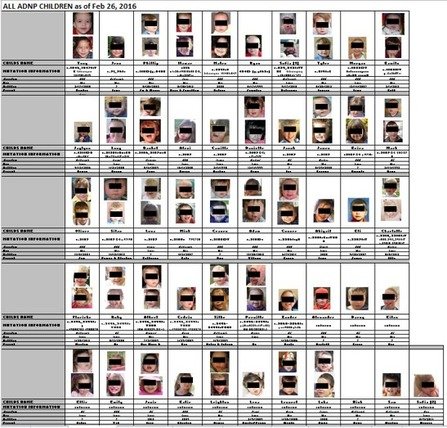
So this got me to thinking about the epic failures in our medical system and the fact that most people have no idea just how incredibly hard it is to have to fight to have your child diagnosed. Did you know that 1 in 10 Americans are living with rare diseases and the rate of getting an accurate diagnosis is very low. 80% of all rare diseases are caused by faulty genes, so finding answers is NOT impossible. Families should not have to fight to find a diagnosis, and these children shouldn’t have to suffer because they are missing valuable treatment they might not have without a diagnosis! This is what we experienced with our son Tony who is now 8 years old. When he was born along with his twin brother, his doctors heard a heart murmur. After a heart scan they found 4 heart defects requiring surgery. Because the defects were so rare, we were sent immediately to Genetics. We had no family history of any problems so we thought it must be something fluke and that these doctors would be able heal our child. However, over the next few years it became evident that Tony has something extremely severe. He started requiring more surgeries and month by month we would receive a new diagnosis. The list consisted of things like; multiple Heart Defects, multiple Brain Abnormalities, Delayed Milestones, Failure to Thrive, Severe Cognitive Delays, Gross Motor Delays, Fine Motor Delays, Non-Verbal, PDD, Autism Spectrum, Cerebral Palsy Spectrum, Mixed Receptive-Expressive Language Disorder, Phonological Disorder, Motor Skills Disorder, Sensory Processing Disorder, Hypotonia, Gastro-Esophageal Reflux Disease, Hyperactive Gag Reflux, Frenulum Linguae, Oropharyngeal Dysphagia, Feeding Difficulties, Un-descended Testicles, Bilateral Cryptorchidism, Congenital Hernia, Cortical Vision Impairment (CVI), Disorder of Visual Cortex, Delayed Visual Maturation, Irregular Astigmatism, Hyperopia, Unspecified Disorder of Refraction and Accommodation, Strabismus, Central Nervous System Disorder, Hydrocephalus and the list goes on and on….. Shocking isn’t it! Now imagine not one doctor being able to tell you why this was happening to your child. The pain and stress is indescribably. Tony went through almost 6 years having single gene genetic syndrome tests. We began to watch our doctors giving up on him. These doctors told us to go home and forget about ever finding a diagnosis! They told us that Tony had something “rare” and “unique” to his genetic makeup and that we would never find out what was the cause because it was unique to him. Meaning we would never know what his future looked like, if he would live or die, if he would continue to get worse or even if this was something that could affect his twin brother. After we discovered that Tony had a mild loss of brain volume (atrophy), we decided that we were not going to give up searching for answers. After multiple requests and being denied WES (aka Whole Exome Sequencing) by our insurance, we went out on our own and found a study at Duke University for undiagnosed children. Within a matter of months, Tony was diagnosed with a mutation on his ADNP gene which causes ADNP Syndrome (aka Helsmoortel-Van Der Aa Syndrome). Our doctors wasted 6 years and a single WES-LDT test diagnosed him within a matter of months. He has been diagnosed for a couple of years now, and I have been able to meet many parents who have children with the same syndrome and the one consistent thing I hear is how hard it was to have their child diagnosed. I hear over and over how parents are told “the symptoms do not match any known disorder or syndrome”, or “this is unique to only your child”, or as one parent said, they would treat it as it was the “insert childs name here - syndrome”. As we now know, that simply isn’t true. These kids have a mutation on their ADNP gene causing a genetic syndrome shared by 83 other known children around the world. All of these families have been on the same journey of having a medically complex child and the painstaking task of finding a diagnosis and many of their doctors gave up finding a diagnosis. Only those who fight for WES or those who are lucky enough to have that rare wonderful doctor who goes the extra mile are getting diagnosed. Not just ADNP kids, but all medically complicated undiagnosed kids are being given up on. This is simply unacceptable! These kids are getting screwed! Tossing a child into the “undiagnosed abyss” is unacceptable. There are ways to get answers such as WES and the attitude that “nothing will come up if WES is performed” is unacceptable. That is what they told me and now I know my child has a genetic syndrome that is now thought to be the top gene mutated in Autism. It’s a shame and one I hope the medical community wakes up and takes notice. WES CAN lead to accurate diagnosis, resulting in appropriate and successful therapeutic intervention which is the major goal of precision medicine. My son is getting treatment that we would have never discovered without a diagnosis, and Whole Exome Sequencing is what gave us that diagnosis! So if you have a child who has a rare undiagnosed disease/genetic syndrome, don’t accept “undiagnosed”! Get a new doctor, start looking for research studies, call NIH, or look up organizations like SPARK, Global Genes, NORD and #curesnow. Our children should not be left undiagnosed. To read more about ADNP Syndrome (aka Helsmoortel Vander Aa Syndrome), go to www.ADNPkids.com. MY MOTOR-PLANNING MAN – Difficulties with Speech
|
 RSS Feed
|
IMPORTANT: PLEASE READ THESE TERMS AND CONDITIONS OF USE CAREFULLY BEFORE USING THE ADNPKIDS WEBSITE
All rights reserved. No portion of the content of this website may be reproduced in any manner without the written permission of the author/creator.
This information guide is not a substitute for personal diagnosis. Viewers should consult a medically qualified clinician in all matters relating to genetic diagnosis, management and health. Information on ADNP changes is a very fast-moving field and while the information in this guide is believed to be the best available at the time of publication, some facts may later be updated or change. |
|
